

Translational Research Summer Institute
Intensive training, discussion and reflection on conducting research in community settings. Join us to learn how to conduct research through community partnerships that can result in practices and decisions that help improve lives.

Welcome Reception
June 28, 2026
Program Dates
June 29-30, 2026
Location
Cornell University
Ithaca, NY
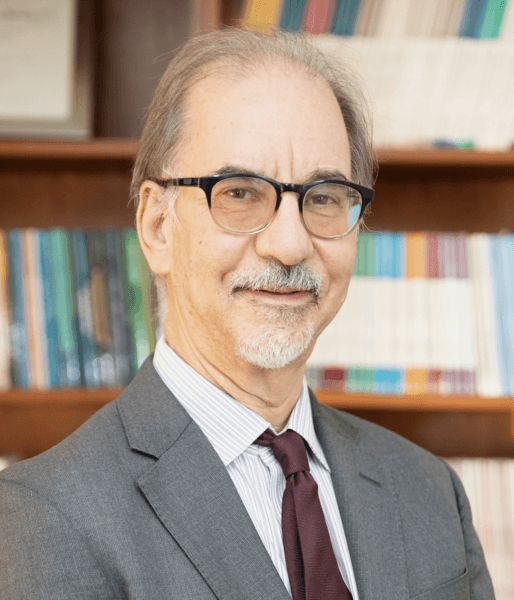
Featuring this year’s keynote speaker
Adam Gamoran
President, William T. Grant Foundation
What is translational research?
The process of translational research connects researchers with practitioners, policymakers and/or community members to create better research, policies, programs and practices. Researchers leverage the knowledge of these partners to better inform their research and, together, they mobilize this knowledge to influence policy changes, program updates, new community services, etc.
What is the Translational Research Summer Institute?
The Bronfenbrenner Center has developed extensive expertise in conducting research in real-world settings and translating empirical findings into practice and we’re sharing this expertise with you!
You’ll spend two days on campus with faculty who have diverse translational research backgrounds. They will provide you with intensive training, discussion and reflection on developing successful partnerships for conducting research in real-world settings, like service agencies, healthcare institutions, and community organizations.
You’ll learn core principles and practices as well as solutions to key challenges researchers face in doing translational research. You’ll also be provided general tips, tools and techniques you can apply as you prepare for your own translational research journey. In addition, you’ll connect with a cohort of peer scholars who are persuing translational research projects.
Who should attend?
This is ideal for early-career researchers (including advanced graduate students and postdocs) interested in conducting research in real-world settings and for established investigators who wish to develop expertise in conducting research with communities, agencies and organizations.
Graduate Students and Postdoctoral Scholars
You may be eligible for conference registration support. Complete this brief survey to let us know your needs.
Note: Submitting the survey does not guarantee support, but helps us assess need and allocate available resources.
Sunday, June 28
Research in Community Panel
5 – 6:30 p.m.
A group of panelists share perspectives of stakeholders who use research evidence or would like to. Questions invite partnership stories from community members’ perspectives and share the type of research evidence that speakers find useful.
Monday, June 29
Morning Session 9 a.m – 12 p.m.
TOPIC 1: Foundations of Translational Research
9-10 a.m. Welcome & Orienting Session
- Introduce CTRSI agenda and goals
- Connection opportunity – learn who is in the room and map some shared interests/expertise
10 a.m.-11 a.m. Pathways in Translational Research
- Discuss iterative process of TR: how to move from research to practice, and practice to research
- Where might current work of participants fit? How does our work map onto these models or related ones?
TOPIC 2: Building Relationships
11 a.m.-12 p.m. Partnerships in Translational Research
- Tips for building reciprocal partnerships and working with different audiences
- Participants will rotate between different presenters to learn from experts about how to build relationships and partner with different audiences (community organizations, departments of health, schools, and elected officials)
12 p.m. – 1 p.m. Lunch
Afternoon Session 1 p.m.-5 p.m.
1 p.m.-2:30 p.m. Translational Research Panel
- Real world examples from experts in the BCTR and Cornell Human Ecology leading TR projects on different topics featuring panelists:
- Martha Holden, co-director of the Residential Child Care Project
- Neil Lewis, Jr., co-director of Action Research Collaborative
- Angela Odoms-Young, director of the Food and Nutrition Education in Communities Program & NYS Expanded Food and Nutrition Program
TOPIC 3: Practical Methods & Applications
2:45 p.m.-3:45 p.m. Special Topics Breakouts (choose a track)
- Options may include: YPAR/Participatory Methods, Research Synthesis, Community Co-Design Processes, Technology & TR
4 p.m.-5 p.m. Keynote: Dr. Adam Gamoran, President, William T. Grant Foundation
Adam Gamoran provides leadership for the William T. Grant Foundation’s strategic direction and shapes its agenda and tactics as President. Since arriving at the Foundation, he launched a new initiative to support research on reducing inequality in youth outcomes, and has continued the Foundation’s ongoing work to improve the use of research evidence in policy and practice decisions that affect young people.
Tuesday, June 30
Morning Session 9 a.m – 12 p.m.
TOPIC 4: Navigating Project Planning and Sustainability
9 a.m.-10:15 a.m. Funding Landscape Panel
- Perspectives on fundraising to support translational research from representatives of leading foundations (e.g., William T. Grant, Bezos Family Foundation)
10:15 a.m.-11 a.m. Translational Research Workshop
- Opportunity for feedback on a potential (or in-progress) translational research project
11 a.m.-11:45 a.m. Aligning Translational Research with Your Career
- Discussion of TR in different roles/career phases
- Opportunities for traditional academic products within authentic partnership work
11:45 a.m.-12 p.m. Closing
- Discuss takeaways and supports that would help participants take their next steps
Keynote Speaker: Adam Gamoran
President, William T. Grant Foundation
Keynote Address: The Future of Higher Education is Still Social Impact
The last decade has witnessed increasing skepticism about the value of universities. Many strategies exist to respond to this challenge, but one that has not received enough attention is fostering social impact research through community-engaged scholarship, which addresses real problems in the everyday lives of community members. Recent experiences demonstrate that incentives to social impact research are viable and that barriers can be surpassed. By fostering trust and mutuality, social impact research carried out in community partnerships can overcome the perils of polarization which are so prominent today.
Adam Gamoran leads William T. Grant Foundation, a charitable organization that supports research to improve the lives of young people. Two priorities guide the Foundation’s grantmaking: identifying ways to reduce inequality in youth outcomes, and improving the use of research evidence in decisions about policy and practice that affect young people. Previously, he held the John D. MacArthur Chair in Sociology and Educational Policy Studies at the University of Wisconsin-Madison, where he spent three decades engaged in research on educational inequality and school reform.
His research contributions have been honored by the Association for Public Policy Analysis and Management, the American Educational Research Association, and the Sociology of Education Section of the American Sociological Association.
Questions?
Contact us at bctr@cornell.edu
Travel Information
Ithaca Tompkins International Airport [ITH] (The nearest airport, 5 miles/8 km from downtown Ithaca)
Airlines: Delta Airlines (via John F. Kennedy International Airport [JFK]), United Airlines (via Washington-Dulles Airport [IAD])
Syracuse Hancock International Airport [SYR] (60 miles/98 km, 1 hour 15 minute drive)
Airlines: Allegiant Air, American Airlines, Breeze Airways, Delta Airlines, Frontier Airlines, JetBlue, United
Greater Binghamton Airport [BGM] (40 miles/64 km, 55 minute drive)
Airlines: Delta Airlines
On-campus
Statler Hotel – 5 min walk to conference location
Off-campus (all a less than 10-min drive from conference location)
Canopy by Hilton (downtown, offers shuttle to airport)
The Hotel Ithaca (downtown, offers shuttle to airport and conference site)
Marriott on the Commons (downtown offers shuttle to airport)
Hilton Garden Inn Ithaca (downtown)
Best Western University Inn (East Hill Plaza, offers shuttle to airport)
Hotels that offer shuttles to airport & conference site
Canopy by Hilton – airport only
The Hotel Ithaca – both
Marriott Ithaca – airport only
Best Western – airport only
Uber & Lyft
Ithaca Taxi companies
Car rentals available at Ithaca Tompkins International Airport
On-campus parking is restricted at all times to those with a permit or those who paid in ParkMobile spots. Pay upon arrival using ParkMobile app.
ParkMobile contactless payments can be made by the hour, by the day, or even for multiple days in some zones. Choose the transaction method that works best for you:
- Download the mobile app for iOS and Android
- Create an online account
- Text PARK to 77223 and pay using your mobile device
Accessible Parking: Your municipal permit must be displayed in conjunction with your ParkMobile payment when parking in accessible spaces on campus. Carefully observe signs when parking; some accessible spaces are reserved for specific license plates. If you need assistance, please call +1 607-255-4600.

Bronfenbrenner Center for Translational Research
1201 Martha Van Rensselaer Hall , Cornell University, Ithaca, NY 14853
phone: 607-254-1480
bctr@cornell.edu
Follow our social media for the latest translational research news and BCTR events!





Copyright © 2025 Bronfenbrenner Center for Translational Research, part of Cornell Human Ecology.
Questions, comments about, or problems using this site? Contact the webmaster.