Cornell recognized the careers of four research associates from the Bronfenbrenner Center for Translational Research with emeritus status this summer. This is the first year that the university is awarding emeritus status, an honorary title for those who want to stay active in scholarship, to research, teaching, and extension (RTE) faculty with at least ten years of service. The Cornell Faculty Senate and Provost Michael I. Kotlikoff approved a resolution authorizing emeritus status for RTE faculty members in March 2021. RTE faculty work encompasses a mix of research, teaching and outreach.
Marney Thomas
Marney Thomas dedicated her career to improving the lives of military families. For much of her 30-plus years with Cornell, Thomas served as director of the BCTR-Military Projects, which developed and disseminated training, evaluation and research programs for military families. These include programs to prevent child and spouse abuse, support new parents and families with special needs, support victims of sexual violence, and address family separations.
 “Marney’s career exemplifies excellence in translational research and outreach, and offers a standard for showcasing the promise of extension work throughout the college,” said Anthony Burrow, BCTR director.
With her colleagues from the BCTR and the College of Human Ecology, along with partners from other land-grant universities and the military, her work helped establish a culture on military bases that valued and supported service members and their families.
Throughout her career, Thomas visited military bases across the globe and helped them implement and evaluate projects and programs that positively impacted families.
“Before the term ‘translational research’ became popular, our work with the military was in the finest tradition of Cornell’s land-grant mission of applying world-class expertise to solve real world problems,” Thomas said. “This span of over 30 years has been one of the most rewarding periods of my career and is the most important applied research and extension work I have ever done.”
Today, Thomas continues to volunteer at Cornell as a health careers education center interviewer and a member of the newly formed Cornell Military Communications Consortium, which coordinates military-related resources across campus.
“I am very proud of being a Cornellian and I am grateful for the opportunity to receive emerita status,” Thomas said.
Brian Leidy
Throughout his 26-year-long career at Cornell, Brian Leidy worked to improve lives and protect some of the most vulnerable in our society. Leidy’s career began as an extension associate, training adult protective service supervisors and adult home administrators for the New York State Department of Social Services. Leidy left Cornell for several years to work for state agencies that supported children and people with disabilities.
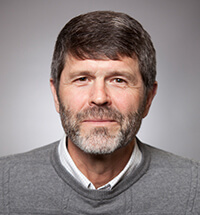 He returned to Cornell in 1995 as the evaluation manager for BCTR-Military Projects, and later on became director.
Throughout his time at Cornell, he served as the principal investigator on 21 grants bringing in more than $14 million.
“Brian’s excellence in program leadership and innovation within the Military Projects are clearly recognized throughout the center and College of Human Ecology, and his contributions continue to have meaningful impact,” Burrow said.
It was a job that Leidy enjoyed, and one that made a measurable difference to families.
“My job was the perfect fit for my work and educational experiences,” Leidy said. “I loved the people I worked with and I loved the work itself. It was amazing that I got paid to do it. The findings from our evaluations demonstrated that family support programs improved outcomes for service members and their families, and also helped to refine policy within the military resulting in safer military communities, greater satisfaction with military life, improved retention of personnel, and improved recruitment.”
Janis Whitlock
In 24 years as a Cornell researcher, Janis Whitlock expanded our understanding about the factors that affect the social and emotional health of adolescents and young adults, especially in the areas of self-injury and technology. Whitlock founded the Cornell Research Program on Self-Injury and Recovery and became one of the leading researchers of self-injury in the nation. She also conducted research on sexual violence prevention, suicide prevention, and the role of digital technologies in well-being.
 “Janis embodies a true translational researcher, her research builds knowledge and then applies what is learned and what works to promote health and well-being,” said Jane Powers, senior extension associate at the BCTR and director of the ACT for Youth Center for Community Action.
Since retiring from Cornell, Whitlock completed a fellowship at Vrije Universiteit Brussel (VUB) and KU Leuven in Belgium on non-suicidal self-injury, parenting and social media, and mental health sponsored by The Francqui Foundation. She serves as a consultant for the Jed Foundation, a non-profit focused on improving the emotional health of teens and young adults and preventing suicide. She’s also creating a consulting business to support schools and communities in improving adolescent mental health.
“We have a lot of knowledge on youth and mental health,” Whitlock explained. “We know poverty is bad for kids, we know multicultural youth need different kinds of support. I want to take what we have learned and use it to start making a difference in the world. I am thinking about how I can help schools, communities and parents to use programs, approaches and sensibilities we know help to support adolescent mental health.”
Emeritus status is an honor for Whitlock, and it will allow her to work on issues surrounding the mental health of young people.
“This honor feels symbolically important because it’s a way of the university saying, ‘You are still part of the Cornell community,’” she said. “It’s also fantastic to have access to Cornell resources that will continue to allow me to work in this field.”
Michael Nunno
Michael Nunno was instrumental in protecting the lives of vulnerable children across New York and the globe throughout his 33 years at Cornell.
Nunno began his career developing and managing the New York State Child Protective Services Training Institute, which directed the professional training and education of more than 1,500 child protective services personnel throughout the state. As a result of his work, New York was one of the first states to standardize the training of all child protective services workers in the state.
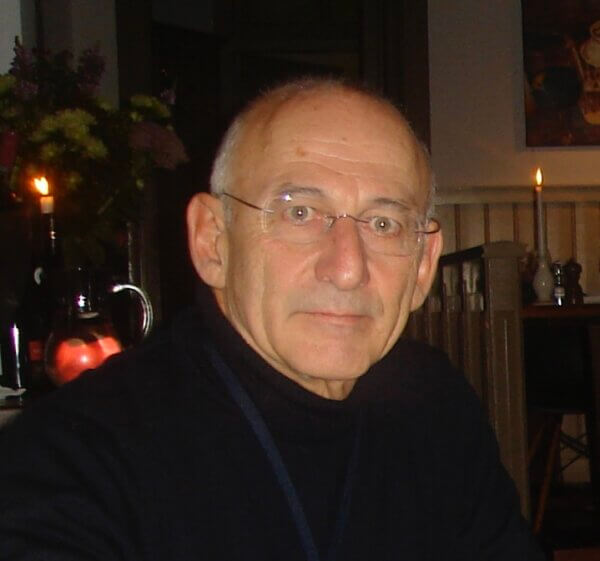 His work was critical to the development of the BCTR’s Residential Child Care Project, created to address the abuse and neglect of children in New York’s child welfare, juvenile justice and mental health residential institutions. He also helped to extend RCCP’s resources across the globe.
“Michael’s career so firmly exemplifies excellence in translational research and outreach; it offers a standard for showcasing the promise of extension work throughout college,” Burrow said.
The comradery and the level of scholarship at Cornell were the highlights of Nunno’s career.
“The people who came before me, along with my mentors and colleagues at Cornell, helped shape my career and offered invaluable assistance and direction,” Nunno said. “They were all brilliant, and it was a joy to work with people at that level.”
Establishing the RCCP was a lesson for Nunno, who initially didn’t want to get involved in residential programs. Since the program began in 1980, he has worked with dozens of youth residential agencies to build organizational capacity and staff that support positive, age-appropriate developmental relationships between children and adult caretakers.
“This is a project I didn’t want to get involved in, and I’ve been continually involved with it in the last 40 years,” he said. “The work is still in use today, and it has made important impacts throughout New York, North America, and internationally. The lesson is, you never know what’s coming to you, and you never know if it’s a good idea and will bear fruit.”
Nunno is still involved with the RCCP today, publishing articles, presenting at conferences, and consulting with residential agencies.